Mental Health Speaker, Educator, and Trainer
Speaking engagements, workshops, classes, and professional trainings for organizations, professionals, and communities
Learning is more useful when people can understand what they are learning, connect it to their own experiences, and leave knowing what they can actually do with it.
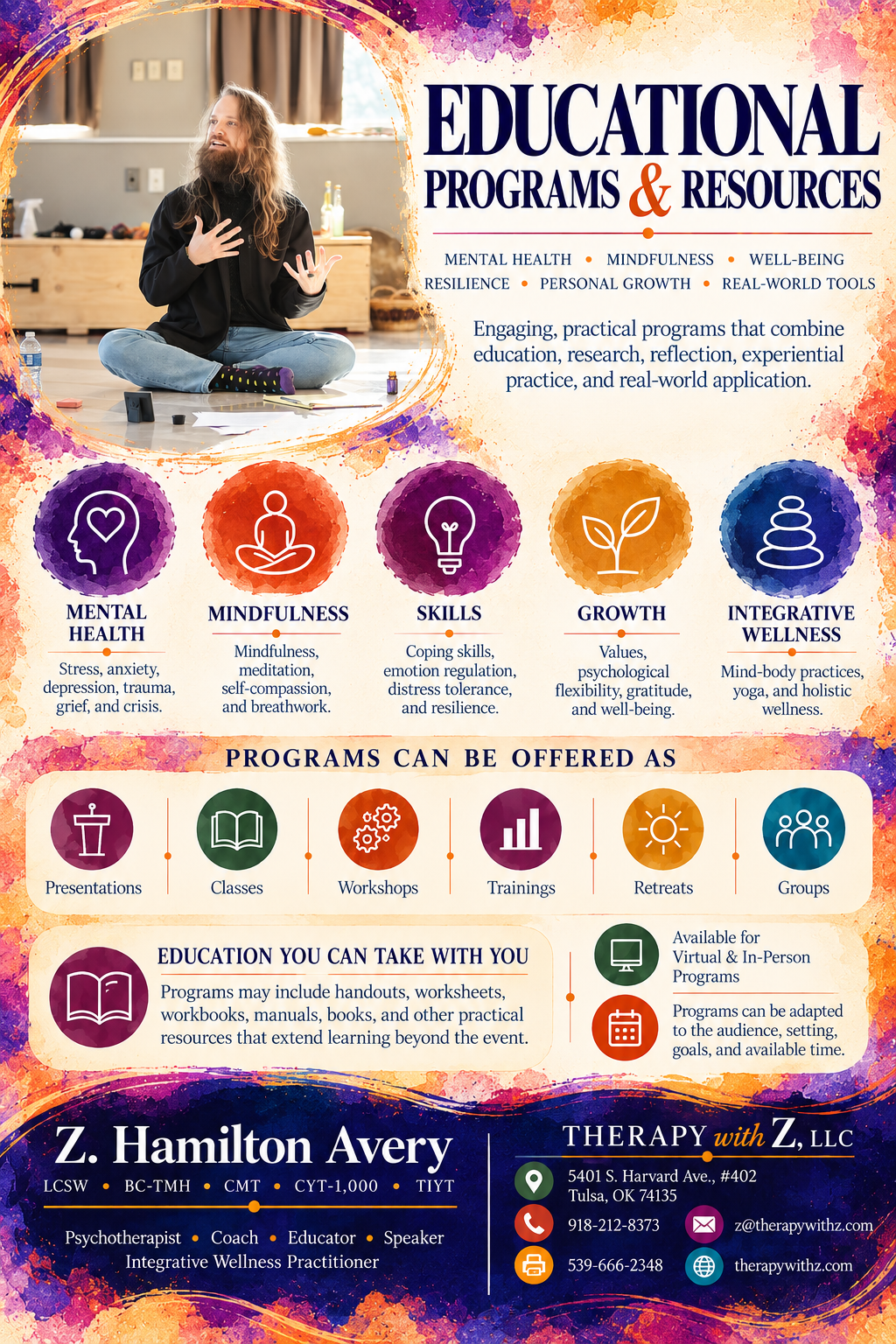
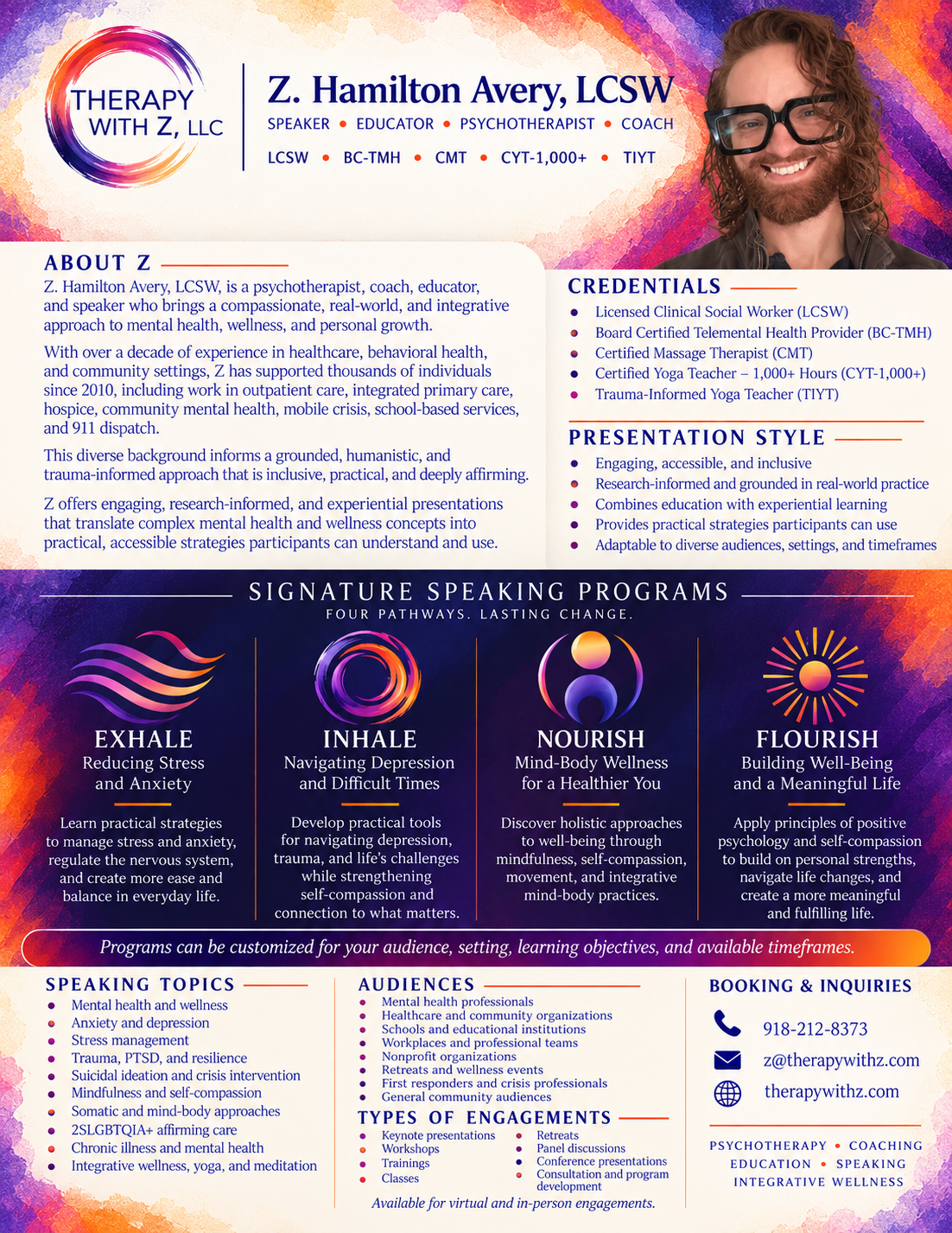
I provide mental health speaking engagements, workshops, classes, and professional trainings for organizations, professionals, conferences, and communities. Programs translate research, clinical knowledge, and interdisciplinary perspectives into accessible and practical learning experiences and may address mental health, behavioral health, trauma and PTSD, suicide prevention, suicidal ideation, coping skills, mindfulness, self-compassion, integrative wellness, and related topics.
My work as a mental health speaker, educator, and trainer draws from more than 15 years of interdisciplinary professional experience spanning behavioral health, healthcare, crisis services, clinical social work, psychotherapy, coaching, bodywork, yoga, meditation, and integrative wellness. Programs can be adapted for community audiences, healthcare and behavioral health professionals, organizations, conferences, schools, and other groups.
Mental Health Speaking Engagements
Speaking engagements can introduce an audience to an important topic, translate complex information into understandable language, challenge assumptions, and provide practical ideas and resources that participants can take with them.
Presentations are designed around the audience rather than delivered as identical scripts regardless of setting. Depending on the program, presentations may incorporate visual materials, research, stories and examples, guided reflection, experiential exercises, practical resources, and opportunities for questions and discussion.
I am comfortable speaking about subjects that can be clinically or emotionally complex without making the presentation unnecessarily clinical. Topics can be approached with seriousness, warmth, curiosity, and appropriate humor while maintaining respect for the different experiences people may bring into the room.
Mental Health Classes and Workshops
Classes and workshops provide more time to move beyond introduction and into exploration and application.
Programs may combine education with discussion, guided exercises, skills practice, reflection, handouts, and opportunities to explore how concepts apply in everyday life. Depending on the subject and audience, participants may learn practical strategies, examine patterns or assumptions, explore research and theory, and leave with resources for continued learning.
Programs can range from focused introductory classes to more extensive workshops and progressive learning experiences. Some topics can also be developed as a series, allowing participants to begin with foundational material and build toward more advanced concepts and applications over time.
Mental Health and Behavioral Health Training for Professionals
Professional training allows for greater depth, particularly when the audience includes clinicians, social workers, healthcare professionals, educators, first responders, or others whose work involves supporting people.
Programs may explore research, theory, diagnosis and assessment when relevant, treatment models, interventions, clinical reasoning, ethical considerations, practical application, and the process of translating knowledge into effective care. Training can also address how professionals teach skills, facilitate difficult conversations, respond to risk, or adapt interventions for different populations and settings.
Rather than teaching techniques in isolation, I am particularly interested in helping professionals understand why an approach may work, what it is intended to accomplish, when it may or may not fit, and how to make thoughtful decisions about its use.
Professional programs can be adapted to the experience level and needs of the audience, from introductory education to more advanced clinical training.
Mental Health Speaking and Training Topics
Programs can be developed around established presentations or customized around the needs of an organization or audience. Areas of focus may include:
Trauma, PTSD, and Trauma-Informed Care
Suicide Prevention, Suicidal Ideation, and Safety Planning
Stress, Anxiety, Depression, and Emotional Well-Being
Coping Skills, Emotion Regulation, and Distress Tolerance
Mindfulness and Meditation
Self-Compassion and Compassion-Focused Approaches
Resilience and Well-Being
2SLGBTQIA+ Affirming Care
Chronic Illness, Persistent Pain, and Mind-Body Health
Grief, Loss, and Major Life Transitions
Motivational Interviewing and Behavior Change
Person-Centered, Strengths-Based, and Trauma-Informed Practice
Therapeutic Alliance and Collaborative Care
Behavioral Health and Integrated Healthcare
Complementary and Integrative Approaches to Health and Well-Being
Yoga, Somatic Practices, and Mind-Body Approaches
Clinical Skills and Professional Development for Helping Professionals
Topics can be combined or adapted when a program would benefit from an interdisciplinary perspective.
Research Translated Into Practical Learning
Research matters in my educational work, but a presentation should not require an audience to decode an academic journal article before the information becomes useful.
I draw from peer-reviewed research, established clinical and behavioral models, professional guidance, and interdisciplinary literature when developing programs. I look beyond individual studies when possible and consider the broader evidence base, including randomized controlled trials, multiple efficacy studies, systematic reviews, meta-analyses, and other credible sources appropriate to the subject.
The strength of the evidence is not identical across every topic I teach. When research is well established, I can explain what we know. When evidence is emerging, mixed, limited, or uncertain, I aim to make those distinctions clear rather than presenting every approach with the same level of confidence.
My goal is research translation: making complex information understandable enough that people can evaluate it, connect it to their lives or work, and decide what to do with it.
Learning Should Be Participatory
I typically use structure to create a clear learning environment without treating a presentation as a script that cannot change.
Programs may include an agenda or learning objectives, visual materials, handouts, resources, discussion, experiential exercises, audience participation, and Q&A. The amount of interaction can be adjusted based on the setting, audience size, available time, topic, and goals of the program.
Questions are welcome, as are different perspectives. When discussion takes an unexpected direction, I can make room for what is useful while maintaining enough structure to ensure that the program still accomplishes what participants came to learn.
The goal is not simply to deliver information. It is to help people engage with it, understand it, and leave with something useful.
Trauma-Informed and Accessible Facilitation
People enter educational spaces with different histories, identities, abilities, levels of knowledge, sensory needs, processing styles, and relationships to the material being discussed. This is particularly important when teaching about trauma, suicide, mental health, chronic illness, identity, or other potentially sensitive subjects.
I use trauma-informed principles to create as much choice and predictability as reasonably possible. Depending on the setting, this may include explaining what will be covered, providing context before sensitive material, allowing participants to step away when needed, offering alternatives during experiential activities, and avoiding unnecessary pressure to disclose personal experiences.
Accessibility also influences how I structure learning. Breaks, opportunities for movement, different ways of participating, clear written and visual materials, and consideration for different processing and sensory needs can make educational experiences more usable for more people.
Trauma-informed education does not require avoiding difficult subjects. It means approaching them intentionally.
An Interdisciplinary Perspective
My teaching is shaped by an interdisciplinary professional path rather than a single area of training. My education spans pre-nursing, psychology, and social work, and my professional experience has included bodywork and massage therapy, yoga and meditation, complementary and integrative health, 911 emergency communications and crisis response, behavioral health, healthcare, clinical social work, psychotherapy, coaching, hospice and end-of-life care, and education.
That breadth allows me to examine topics from multiple perspectives while remaining clear about professional boundaries and differences in evidence. A program about stress, for example, may benefit from behavioral science, psychology, physiology, mindfulness, healthcare, and practical coping strategies without treating those perspectives as interchangeable.
Interdisciplinary learning is most useful when different fields illuminate one another rather than being blended together indiscriminately.
Programs Can Be Customized
Organizations do not all need the same presentation.
An established program can often be adapted to fit a particular audience, setting, learning objective, or amount of available time. A presentation developed for a community audience may emphasize accessible education and practical strategies. A version for clinicians may examine research, theory, assessment, interventions, and clinical application in considerably greater depth.
Customization may include adjustments to:
audience and professional background
learning objectives
introductory or advanced level
program length
amount of experiential practice
discussion and Q&A
clinical versus community emphasis
examples and applications
handouts and supporting resources
virtual or in-person delivery
For some subjects, progressive programs can also be developed so that introductory material establishes a foundation for later intermediate or advanced learning.
Virtual and In-Person Mental Health Speaking and Training
Virtual speaking engagements, classes, workshops, and professional trainings are available nationwide and can make programming accessible to organizations and participants across geographic locations.
In-person speaking and training may also be available for select events and organizations depending on the location, schedule, travel requirements, audience, scope of the engagement, and appropriate travel arrangements and compensation.
Program length can vary considerably. Depending on the subject and setting, an engagement might be a focused presentation, longer workshop, professional training, multi-session series, or another format developed around the learning goals of the audience.
Audiences and Organizations I Work With
Speaking, education, and training may be appropriate for:
behavioral health and mental health organizations
healthcare organizations and interdisciplinary care teams
social workers, therapists, and other helping professionals
schools, colleges, and universities
first responders and crisis professionals
hospice and end-of-life care organizations
organizations serving older adults
nonprofit and community organizations
professional associations
conferences and continuing education events
workplaces and employee groups
2SLGBTQIA+ organizations and communities
wellness and integrative health organizations
other groups seeking practical, research-informed education
If you are unsure whether a topic or program would fit your audience, you are welcome to reach out to discuss what you are looking for.
Frequently Asked Questions
Do you offer virtual presentations?
Yes. Virtual mental health speaking engagements, classes, workshops, and professional trainings are available nationwide and can be provided to organizations and audiences across geographic locations.
Are you available for in-person speaking engagements or trainings?
Yes, selectively. In-person availability depends on the location, schedule, travel requirements, scope of the engagement, audience, and other event details.
Can you customize a presentation for our organization?
Yes. Existing programs can often be adapted to the audience, setting, available time, learning objectives, and desired level of depth. More substantial customization or development of a new program can also be discussed.
Do you provide training for mental health professionals?
Yes. Professional and clinical trainings can explore research, theory, assessment, diagnosis when relevant, treatment models, interventions, clinical reasoning, practical application, and other topics appropriate to the audience.
Do you provide continuing education programs?
Programs may be appropriate for professional education and continuing education settings. Specific continuing education approval, sponsorship, credit availability, and requirements depend on the individual program, profession, jurisdiction, and sponsoring organization.
Can presentations include experiential exercises?
Yes. Depending on the subject, audience, and setting, programs may include guided exercises, skills practice, reflection, discussion, or other experiential components. Participation is approached with choice, particularly when activities involve mindfulness, body awareness, trauma-related material, or personal reflection.
Do you provide handouts or resources?
Often, yes. Depending on the program, participants may receive handouts, references, exercises, recommended resources, or other materials that support continued learning after the presentation.
Can you create a series rather than a single presentation?
Yes. Some subjects are particularly well suited to progressive learning. Programs can be structured so that foundational material is introduced first and later sessions build toward intermediate or advanced understanding and application.
What does a speaking or training engagement cost?
Fees vary based on the program format, length, audience, customization, preparation requirements, travel, and other details. Contact me with information about your event or organization so that we can discuss the scope of the engagement and determine an appropriate fee.
How do we begin?
Send an inquiry with as much information as you currently have about your organization, audience, topic or goals, preferred date, format, location, and approximate program length. You do not need to have every detail finalized before reaching out.
Interested in Working Together?
If you are planning a conference, professional training, workshop, class, organizational program, or community event, I would be glad to learn more about what you are looking for and whether my background is a good fit.